

On this pageBrowse sections
A visual introduction to the topic
How trends and earlier results help clinicians understand what is new, what is stable, and what needs attention now.
Written by the WCGTX Editorial Team
The clear answer
Doctors compare today’s test results with earlier ones because a change over time can reveal something a single number cannot. Previous results help show your usual pattern, whether a change is new, and whether treatment may be affecting the condition being monitored.
The comparison is part of a larger assessment. Symptoms, examination findings, medicines, and the timing and method of testing all matter. A result marked high or low is a clue to discuss with your clinician, rather than a diagnosis on its own.
The central idea
Discover why doctors compare test results over time, what changes may mean, and how symptoms, medicines, lab methods, and older records shape interpretation.
Your earlier results provide context
A laboratory report often includes a reference range: the interval the laboratory uses to help interpret a result. Your own previous readings offer another kind of context. A clinician can consider both rather than relying only on the flag beside a number.
A value outside the listed range may have several explanations. A value inside it does not always rule out a health problem, especially when symptoms are present. The meaning depends on what was tested and why.
An earlier result is useful only if it belongs to the correct person and test. The team also considers when it was measured and whether circumstances have changed since then. An old record should support today’s assessment, not replace it.
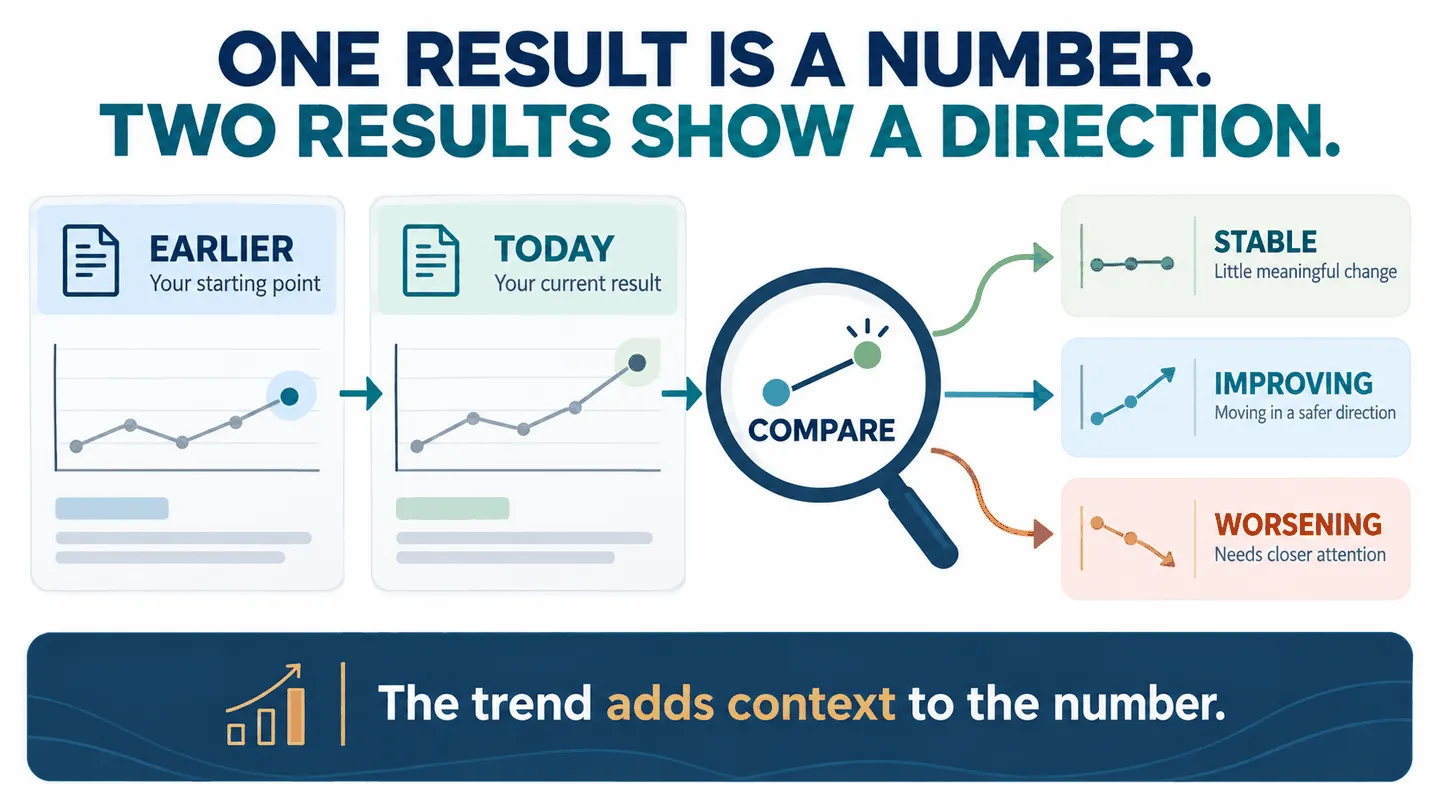
One result gains context over time
Trends can guide the next decision
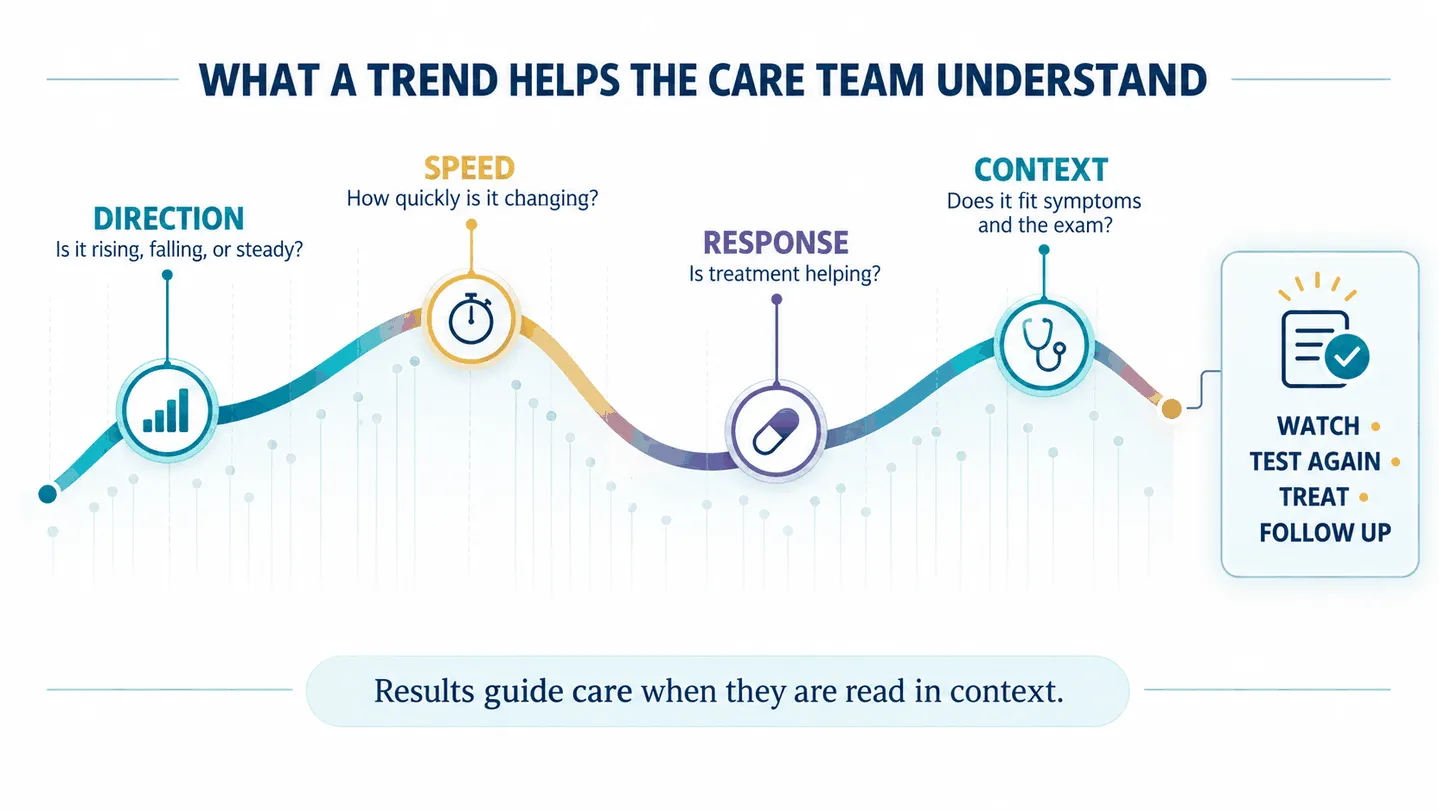
When a test is being used to monitor a condition, repeated measurements may help the clinician decide whether the situation is improving, remaining similar, or worsening. The amount of change and the time between tests both matters.
A blood count, for example, may be considered alongside symptoms and previous results when looking into tiredness or possible bleeding. Kidney blood tests may be reviewed before and after an illness or medicine change. Neither comparison explains the cause by itself.
The next step might be observation, another examination, a repeat test, or a treatment change. There is no single direction or percentage change that applies to every test. A rising result can mean very different things depending on what it measures.
Fair comparisons need matching details
Different laboratories may use different methods, units, and reference ranges. Numbers that look similar may not be directly comparable. Use the range printed on the report and let your clinician assess whether a comparison is valid.
When practical, using the same laboratory for ongoing monitoring can make trends easier to interpret. If your tests came from different laboratories, bring the complete reports rather than only a number copied into a message.
Preparation and circumstances also affect results. Food and drink, medicine use, recent illness, and whether you followed preparation instructions can influence some tests. Tell the team about these details, and do not stop prescribed medicine just to change a result unless instructed.
Connected care starts with clear communication
Keep an updated medicine list, share important changes, and ask who will follow up on pending results. These simple steps help the care team see the same picture.
Build a more connected care team: Explore WCGTX healthcare staffing services
Older scans and other records can help too
Comparison is not limited to blood tests. A clinician may use previous scan reports, heart recordings, or other records to help decide whether a finding is new or was already present. The usefulness depends on the type and quality of the earlier study.
An old report may provide helpful context, while the original images or recording may allow a more direct review. If you know where a study was performed, the team can advise how to request it.
Do not delay urgent evaluation while searching for old paperwork. Clinicians can assess current symptoms and arrange necessary testing even when previous records are unavailable.
Before comparing two reports
Bringing a useful record to your visit
Keep full reports with dates, laboratory names, units, and reference ranges. Note major medicine changes or illnesses around the time of testing. A patient portal can help organize this information, but access between organizations varies.
Discuss results with the clinician who ordered them. Ask how the current result compares with earlier findings and whether it changes the plan. If a result is still pending, confirm who will contact you and when to follow up.
Seek prompt medical help for severe or rapidly worsening symptoms even if an older test was reassuring. Yesterday’s result cannot guarantee that today’s condition is safe.
Frequently asked questions
Does a flagged result always mean something is wrong?
No. Results outside a reference range can occur for different reasons. Your clinician considers the result alongside your symptoms, history, and other findings.
Can I compare numbers from different laboratories?
Not reliably on your own. Methods, units, and ranges can differ. Share complete reports so your clinician can assess whether the results can be compared.
Does every small change require another test?
No. Some variation is expected. The clinician considers the test, size of the change, timing, and your condition before recommending another step.
What if I cannot find my old results?
Tell the team where and when testing was done if you know. It may be able to request records. Current care should proceed as needed without waiting for them.
Sources and medical references
Medical note: This article provides general education and does not replace advice from a qualified healthcare professional.