
On this pageBrowse sections
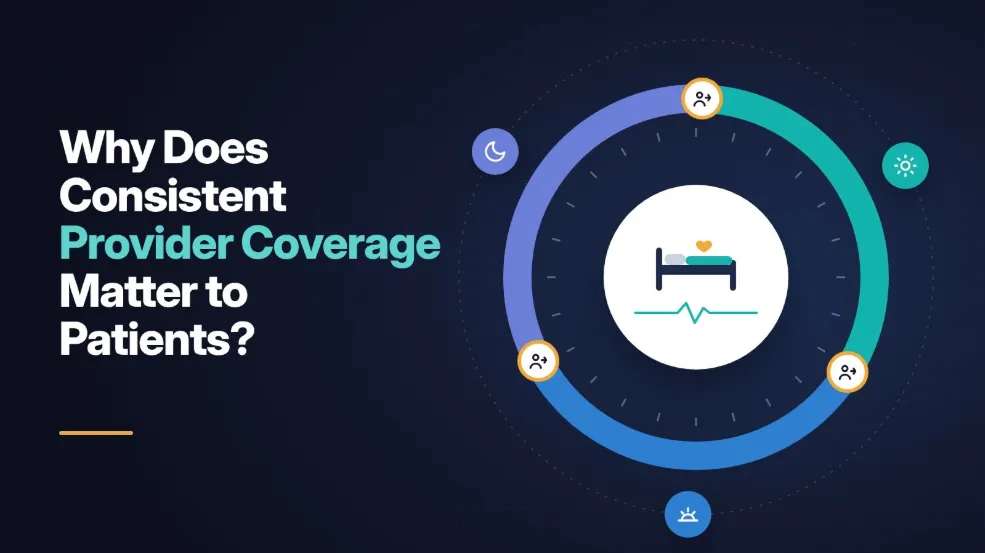
A visual introduction to the topic
Why reliable clinical coverage supports timely decisions, clearer communication, and safer follow-through.
The clear answer
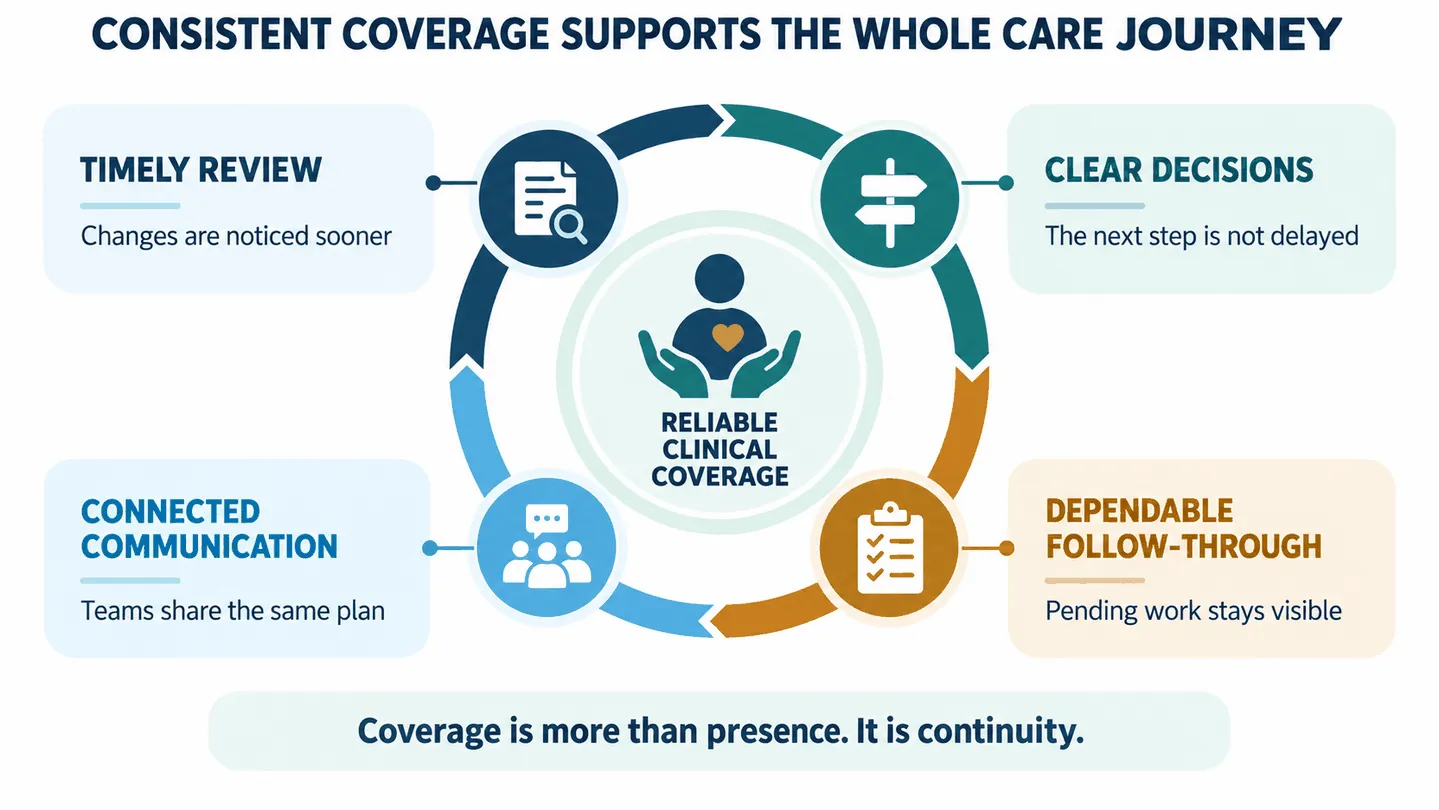
Consistent provider coverage means having an appropriate clinician available when patients need care, with a dependable way to transfer information between shifts. It supports ongoing assessment, treatment decisions, and follow through on work that is still unfinished.
For patients, consistency does not always mean seeing the same doctor throughout a visit or hospital stay. Teams rotate. The goal is for care to remain connected as people change, so your current condition and next steps do not disappear with the previous shift.
Availability and continuity work together
Coverage answers who is available to assess you and make decisions. Continuity describes how your history, goals, and care plan carry forward. A staffed schedule is useful, but information sharing and clear responsibilities are also necessary.
For example, a doctor may order a test near the end of a shift. Reliable coverage means an appropriate clinician is available later; reliable continuity means that clinician knows the test is pending and understands why it was ordered.
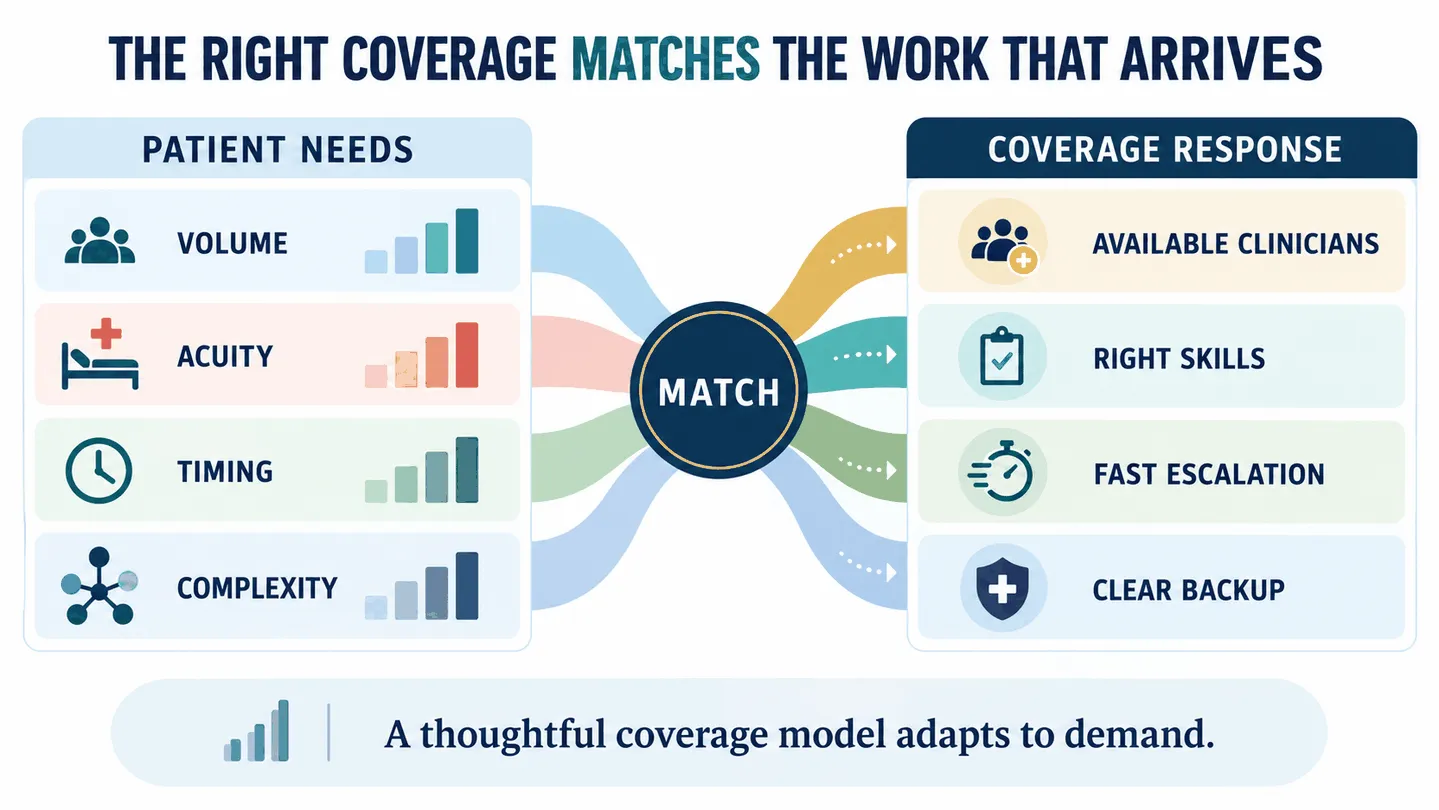
Facilities organize this work differently according to their services and patient needs. A hospital ward, emergency department, and urgent care clinic do not use identical schedules or staffing models.
Coverage and continuity support care
The practical difference for patients
A dependable team can reassess new symptoms, review results, and adjust treatment when necessary. Clear coverage arrangements also help nurses know whom to contact when a concern needs a medical decision.
Patients may experience consistency through an understandable medicine plan, an update about a pending result, or an explanation of who is taking over. These everyday details often matter more to a family than the scheduling process behind them.
Coverage supports these activities, but does not guarantee an immediate visit or a particular outcome. Emergency teams prioritize according to medical urgency, and delays can also involve tests, specialist availability, beds, or other resources.
A shared plan through changing shifts
Useful handoffs include the reason for care, the current condition, relevant risks, and tasks still to complete. The incoming clinician should know what needs review and what signs would require a different response.
An accessible record helps, but important information must also be communicated in a form the next team can use. A long note that hides an urgent concern is less helpful than a clear account of what matters now.
The covering clinician may need to reassess you or clarify your history. Repeated questions can be a safety check rather than evidence that nobody communicated. Tell the team if a major detail seems to have been missed.
Build a more connected care team: Explore WCGTX healthcare staffing services
What consistency can and cannot promise
Familiarity with a facility’s procedures can make teamwork easier. Nevertheless, a new or temporary clinician can provide appropriate care when qualified for the role and supported by effective handoffs and local processes.
The same doctor every day is not always realistic or necessary. A small, organized team may share care while maintaining the same goals. The key is that someone is accountable for current decisions and unfinished work.
Staffing alone cannot remove every risk. Safe care also relies on nursing support, equipment, laboratory and imaging services, communication, and the ability to obtain specialist help when needed.
Four moments that need continuity
Making the current plan easier to follow
Keep your medicine and allergy information available, and tell staff promptly about changes in symptoms. If you hear conflicting instructions, ask the current team to reconcile them.
Before discharge, confirm which clinician or office will handle remaining results and when your next appointment should happen. Ask for written instructions that you can understand and share with your usual clinician.
If you are in the facility and suddenly feel worse, tell staff immediately. After discharge, follow the return precautions in your instructions; use emergency services for symptoms that could be life threatening.
Frequently asked questions
Does consistent coverage mean the same doctor every time?
No. It means appropriate clinical availability and a plan that transfers reliably between people. Seeing the same doctor can help familiarity, but it is not the only way to maintain continuity.
Are temporary physicians less capable?
Employment arrangement alone does not determine clinical ability. Qualifications, the fit for the setting, access to information, and local support all matter.
Will better coverage eliminate waiting?
No. Medical urgency, testing, bed availability, and other resources also affect waiting. Dependable coverage is one part of the system.
What can I confirm before going home?
Check the final medicine list, follow up plan, return precautions, and who reviews unfinished results. Ask for clarification if the plan is unclear.
Sources and medical references
-
Agency for Healthcare Research and Quality: Inpatient Transitions of Care
-
Agency for Healthcare Research and Quality: Care Coordination
Medical note: This article provides general education and does not replace advice from a qualified healthcare professional.