

On this pageBrowse sections
WCGTX PATIENT GUIDE
Symptoms start the investigation. The full clinical picture guides the plan.
By WCGTX Editorial and Clinical Review Team | October 10, 2026
Short answer The same symptom can come from different conditions, and even the same diagnosis can affect two people differently. Clinicians combine the symptom with the examination, medical history, test results, urgency, treatment risks and the patient’s goals. Different treatment can therefore be the safest evidence-based choice for each person.
On This Page
A symptom is a clue, not a diagnosis
Symptoms describe what a person feels or what others observe. They do not always reveal the cause. Chest discomfort, dizziness, tiredness, abdominal pain and shortness of breath can each have many possible explanations. Some are minor, while others need urgent care.
Clinicians use a step-by-step process called a differential diagnosis. They consider the possible causes, look first for dangerous conditions that cannot safely wait, and use the history, examination and tests to narrow the list. Two people can begin with the same symptom and move toward different diagnoses as new information appears.
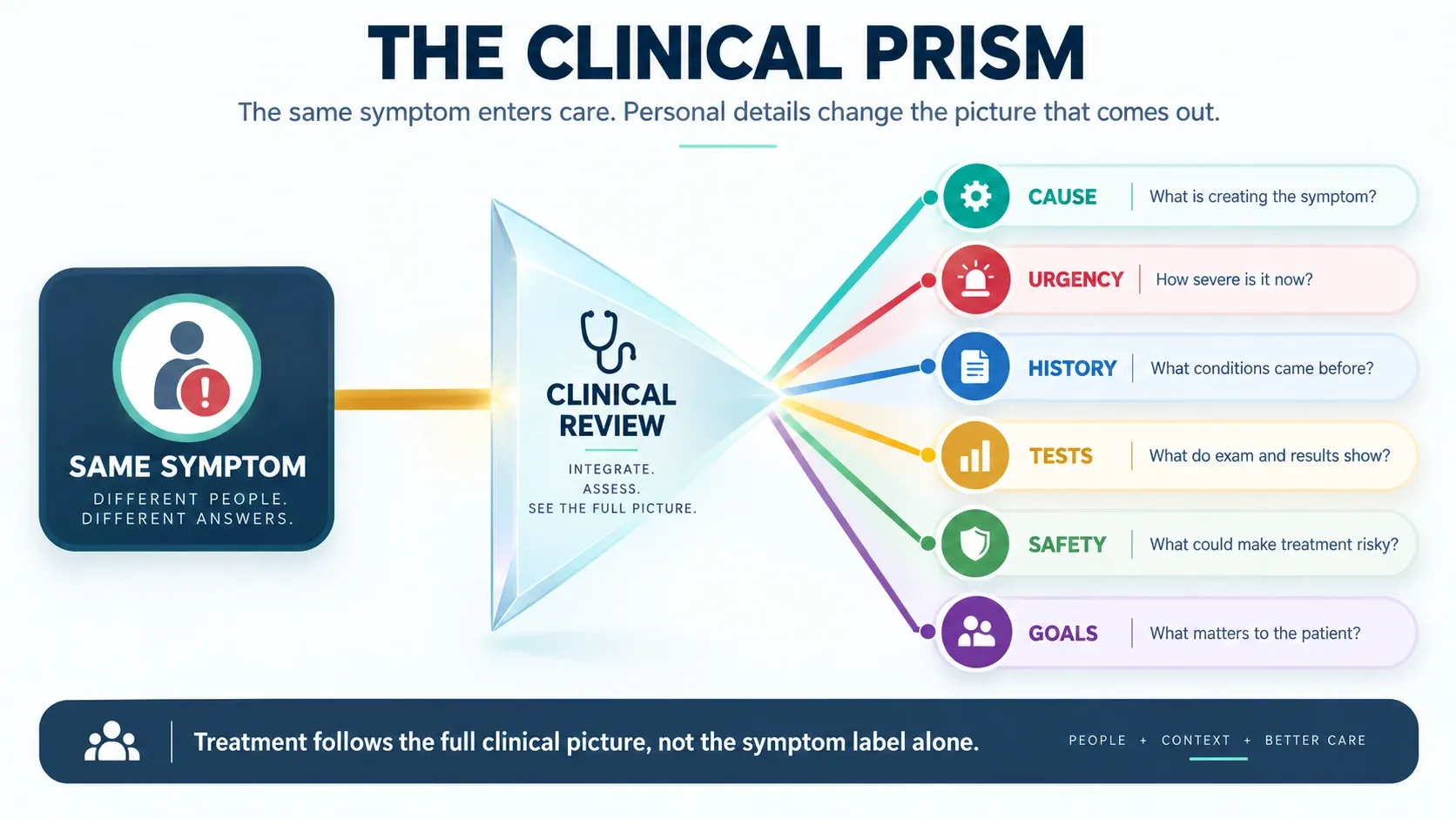
The symptom is the starting point. The plan comes from the whole clinical picture.
The details that change treatment
A treatment decision is rarely based on one test or one number. The care team combines several kinds of information and looks for a pattern that fits the person in front of them.
The likely cause
Different illnesses can create similar symptoms but require very different care. A medicine that helps one cause may do nothing for another or could be unsafe. That is why clinicians may test before prescribing, especially when the cause is unclear.
The severity and timing
How severe the symptoms are, how quickly they started and whether they are improving or worsening all matter. A person with mild, steady symptoms may be safely treated at home, while another person with the same symptom may need monitoring, oxygen, intravenous treatment or a procedure because the condition is more severe.
Medical history and current medicines
Existing heart, lung, kidney, liver or immune conditions can change both the risk of illness and the safety of treatment. Prescription medicines, nonprescription medicines and supplements can interact with a new treatment. A complete medicine list helps the team avoid preventable harm.
Examination and test results
A physical examination, laboratory tests and imaging add information that symptoms alone cannot provide. A test result is interpreted with the person’s history and examination. A value that leads to treatment for one patient may have a different meaning for another.
Safety can change the best option
A treatment may be effective in general but unsafe for a particular person. Clinicians balance the expected benefit against possible harm before recommending a medicine, procedure or watchful waiting.
-
A known allergy or a serious reaction to a similar medicine
-
Reduced kidney or liver function that changes how a medicine is processed
-
Pregnancy or breastfeeding considerations
-
A high risk of bleeding or a history of bleeding
-
Interactions with current medicines or supplements
-
Frailty, falls, swallowing difficulty or limited support at home
These factors do not mean that care is being withheld. They help the team choose a safer dose, a different treatment, closer monitoring or another setting of care.
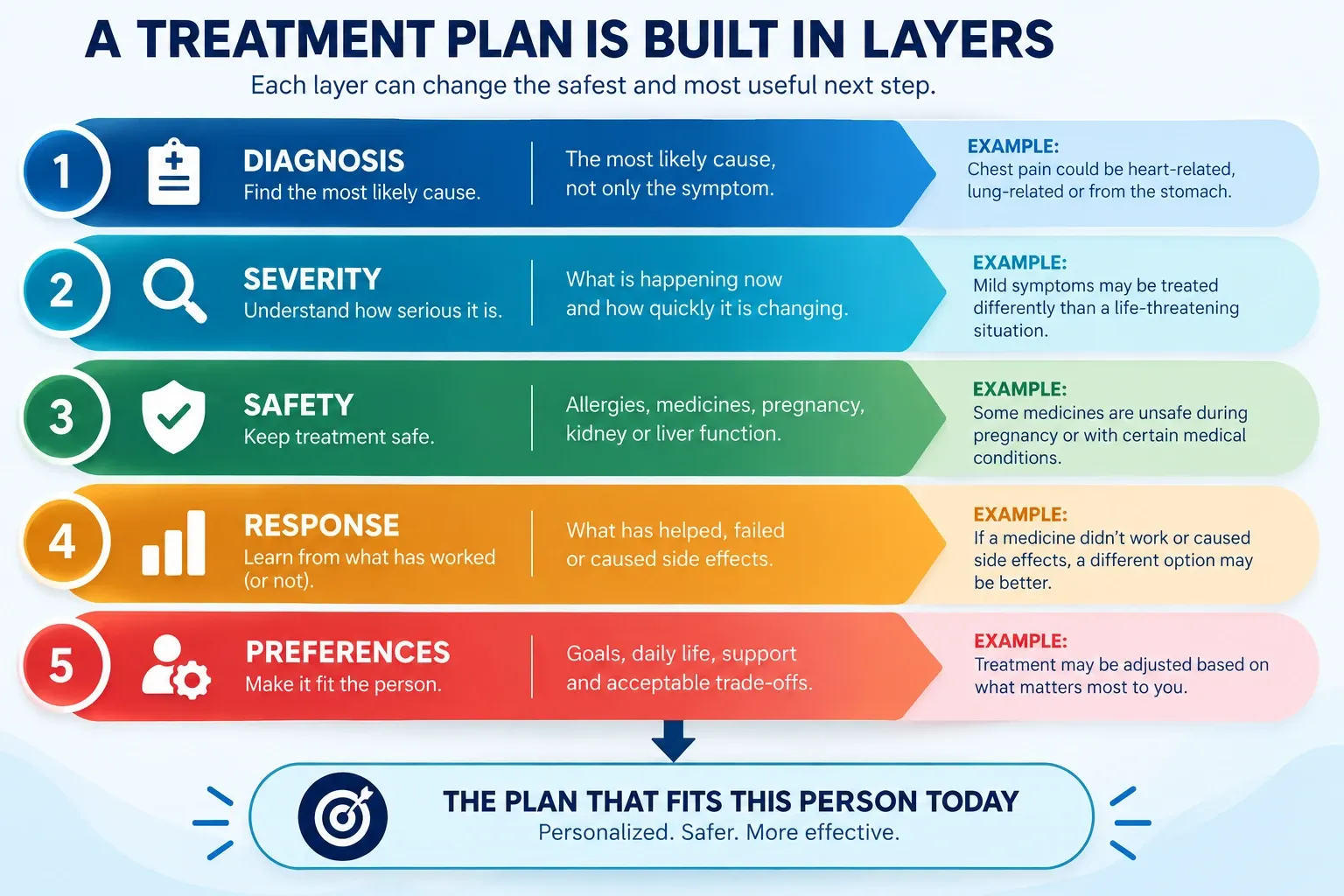
Good treatment is built in layers and adjusted to the person, the evidence and the situation.
The same diagnosis can still need a different plan
Two people can have the same confirmed diagnosis and still need different treatment. One may have a mild form of the illness while the other has complications. One may be able to take a standard medicine while the other needs a different dose or option because of kidney function, bleeding risk or another medicine.
Age alone does not decide treatment, and neither does any single personal characteristic. Clinicians consider how the factors work together. The goal is not to make care different for its own sake. The goal is to make the plan appropriate, safe and useful for the individual patient.
Evidence guides the options
Clinical guidelines and research help define treatments that work for groups of patients. Individual care then applies that evidence to the person’s diagnosis, risks and circumstances. This is why evidence-based care and individualized care belong together.
Patient goals help choose among reasonable options
Sometimes more than one approach is medically reasonable. Shared decision making allows the clinician and patient to compare benefits, risks and practical effects, then choose an option that fits the patient’s goals and values.
For healthcare organizations
Consistent clinical decision making depends on skilled teams, reliable coverage and clear communication. WCGTX supports Texas hospitals, emergency rooms and urgent care facilities with physician staffing, program management and quality improvement services.
Explore WCGTX healthcare staffing solutions | Request a staffing consultation
Treatment can change over time
The first plan is not always the final plan. Clinicians watch how the person responds, review new test results and adjust treatment when the situation changes. A medicine may be increased, reduced, replaced or stopped. A patient may move from observation to discharge, or may need a higher level of care.
A changing plan does not automatically mean the earlier decision was wrong. It may mean the team has new information or that the patient’s condition has changed. The important question is how the new information affected the decision.
Making the decision understandable
Different care should come with a clear explanation. Patients and families can ask what the team thinks is causing the symptom, which findings matter most, what alternatives were considered and what would cause the plan to change.
Individualized treatment should not be used to dismiss concerns or hide unexplained variation. If the reason for a difference is unclear, ask the clinician to explain it in plain language. It is reasonable to request an interpreter, written instructions or a second opinion when appropriate.
-
Share a complete list of medicines, supplements and allergies.
-
Describe when symptoms began and what makes them better or worse.
-
Mention pregnancy, recent procedures and important medical history.
-
Explain practical concerns such as cost, transportation, caregiving and home support.
-
Repeat the plan back in your own words to confirm understanding.
Frequently asked questions
Does different treatment mean one person received better care?
Not necessarily. Different treatment may reflect a different diagnosis, severity, safety risk or patient preference. The care team should be able to explain the medical reason for the plan.
Can two people have the same test result and receive different treatment?
Yes. Test results are interpreted with symptoms, examination findings, medical history and other results. One number rarely determines the whole plan.
Why might one person receive medicine while another is observed?
The expected benefit may differ because of the likely cause, symptom severity, timing, treatment risks or the person’s response so far. Observation is still active care when monitoring is part of the plan.
Can allergies or kidney function change treatment?
Yes. They can affect which medicine is safe, the dose, how often it is given and what monitoring is needed.
Why did the treatment plan change after new tests?
New results may confirm a cause, rule out another cause or show that the condition is improving or worsening. Clinicians update the plan as the clinical picture becomes clearer.
What should I ask when the reason for different treatment is unclear?
Ask which findings changed the decision, what alternatives were considered, what benefits and risks matter most, and what would lead to a different next step.
The key message
Similar symptoms do not always mean the same illness, and the same illness does not affect everyone in the same way. The safest plan combines medical evidence with the person’s diagnosis, urgency, health history, test results, treatment risks, response and goals.
Different treatment should be understandable. A clear explanation helps patients see how the plan fits their situation and what to expect next.
Sources
-
National Institutes of Health: The Promise of Precision Medicine
-
National Heart, Lung, and Blood Institute: Precision Medicine Activities
-
Agency for Healthcare Research and Quality: Shared Decision Making
Medical disclaimer: This article provides general education and does not replace diagnosis or treatment from a qualified clinician. Seek emergency care for severe, sudden or life-threatening symptoms.
Written and reviewed by WCGTX Editorial and Clinical Review Team